Wednesday, March 6, 2019

The Future of Protection

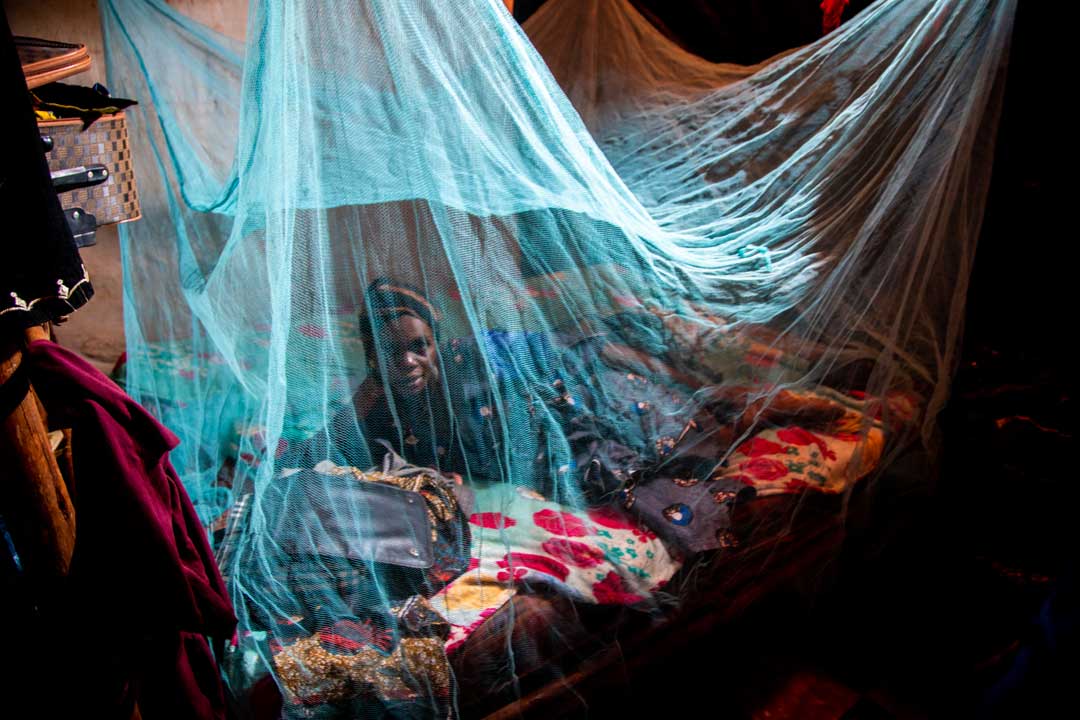
We are in a period of the globalisation of fragility. The definition of protection, its scope and limitations, the role of humanitarian agencies, authorities and other actors has been and continues to be debated. Within the Red Cross Red Crescent Movement, interpretations and practice on protection is also diverse and varied but the aspect is to explore it in a wide perspective around Do No Harm and keeping people safe, considering how National Societies (NS) have always engaged in wide range of protective actions, and in response to increasing conflict, displacement and migration, some are increasingly active in certain fields.
DRIVING TRENDS

A cursory glance at the 2017 Global Peace Index (The 2017 Global Peace Index) makes for very interesting reading. Though it shows a slight improvement from 2016 due to gains in six of the nine geographical regions represented, the Index records a less peaceful world over the past decade. Since 2008, the global level of peace has deteriorated by 2.14%, with 80 countries improving while 83 countries deteriorated.
One of the major trends recorded over the last decade and attributed to this decline has been the growing inequality in peace between the most and least peaceful countries. These trends show that the growing inequality in peace is largely attributable to the rise of conflicts within states, the rise of terrorism and increasing levels of criminality. As desperate people flee conflict zones, the impact of forced displacement is hitting neighbouring countries hardest and they are coping as best they can.   The number of displaced people and refugees is the highest since the end of the Second World War. While the first half of the 20th century was a major period of inter-state warfare and wars of decolonisation, the second half gave way to an era of predominantly civil conflicts. A little over 20% of the world’s population live in countries under the threat of large-scale, organised violence, according to the World Bank’s 2011 World Development Report.
Experiences over the last decade in many parts of the world illustrate the challenges that the changing nature of armed conflict poses for peace as the landscape and nature of conflict change. Challenges to the established order in different places around the world are rising, linked to diverse causes – political change, regional and national autonomy, urbanisation, climate change, faith and cultural identity, or securing the basic conditions of life. Underlying some of the causes for current conflicts are some cross-cutting characteristics, including the rise of violent non-state actors and the prevalence of civil wars; deep socio-political and ethno-religious conflicts; huge levels of mistrust and intolerance; constantly changing alliances, loyalties and relationships; changing frontlines and territorial control; destruction of social infrastructures and services; and links to natural resources.
We are moving into a period of globalisation of fragility.  For all the relative calmness and progress of the second half of the 20th Century and the early years of the 21st, we still see a world that is hurting due to increased fragility – fragility that is globalising at the pace of our fast-evolving world.
HOW WILL THIS PLAY OUT IN THE NEXT 10 YEARS?

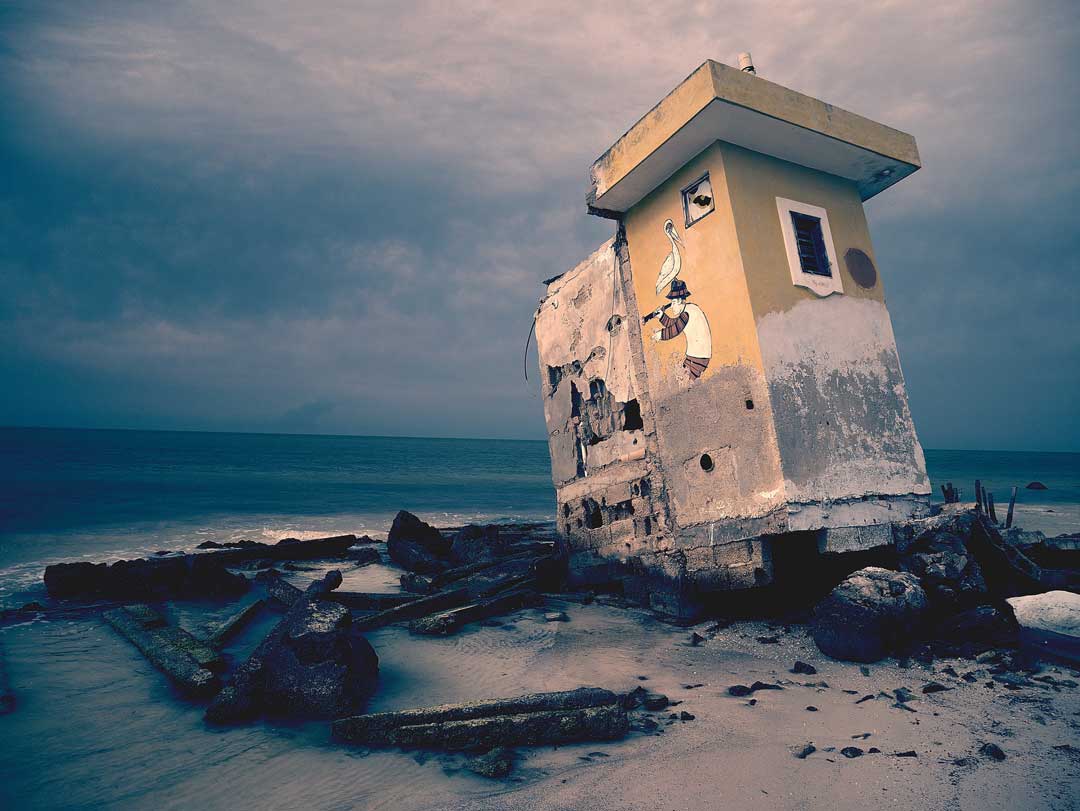
Understanding how the different elements of risk interact with each other is fundamental to looking at the future of protection. The capacity to respond to challenges is necessary but not enough; and relying on crisis response is truly inadequate. It is essential to meet emerging problems upstream. We need to build systems that minimise risk and improve the human condition holistically.
As we look forward, we need to explore some key issues which raises questions around challenges for the concept of protection and the future of peace for the Red Cross and Red Crescent:
  • The scale and character of conflict is changing.  The distinctions between war and peace and who is a combatant and non-combatant are becoming uncomfortably blurred.  The battlefielf is both local and global. Modern conflict is hybrid in nature, combining traditional battlefield techniques with elements that were previously mostly associated with armed non-state actors. The Fourth Industrial Revolution offers individuals increasingly diverse ways to harm others on a grand scale such as cyber warfare / autonomous warfare. Current trends suggest a rapid and massive democratization of the capacity to inflict damage on a very large scale, challenging existing legal and ethical frameworks.  All of this raises questions around
    • What do we mean by peace? What is the definition of peace and what is a holistic version of this?
    • What do we mean by violent extremism and should we be dealing with it and if so what should our role be?
    • How can we work for conflict resolution and peaceful change in an era of renewed geopolitical division? Should we be playing a role?
    • What are the new ideas and initiatives on how to mediate conflict, but also in terms of fixing the relationships between the parties that stand behind those who are fighting?
    • How we remain true to an agenda that will transform people’s lives require supporting and working with those who work for peaceful change – in and out of government, in civil society, and including women and youth to help them:
      1. call for peaceful change;
      2. survive during conflict and maintain cohesion across conflict divides;
      3. rebuild their lives and their institutions after the guns fall silent;
      4. get involved fully and meaningfully in peace and reconciliation processes so that they can influence and live with the peace settlements that emerge.
This is a time of fundamental technological change. These rapid advances in technology are providing more than new capabilities – they are changing the way we live, work and relate to one another. The future (and the present) is digital: Humanitarian organizations are progressively becoming more digitally present, and able to leverage larger amounts of data from both offline and online groups of affected people.  What does this mean around protection and the future of peace? Do we need to talk about new norms and conventions that will protect civilian and affected community interests: a ‘Geneva Convention’ for the digital world which will be a critical first step to addressing a greater set of challenges around digital freedoms? In 2018, we’re only just beginning to understand how the digital revolution will alter the make-up of our societies and lives. We need to be asking ourselves what a free society looks like in a digital world and what forms our democratic rights take online. It’s no longer just our right to assemble peacefully offline that needs to be protected, it is also our right to assemble and mobilize online.
How can we learn how to build and develop trust with affected people, including in the digital space? Arguably, trust can only be achieved with some level of delivery, a degree of openness, transparency and a predisposition to learn. This includes more willingness from us to take criticism on board, reflect and act on it. However, what trust really means in the context of relationships between affected people and humanitarians, particularly in conflicts and situations of violence, remains poorly understood. Similarly, how it is to be built and developed, including in the digital space, is lacking. We need to examine and consider how to build “virtual proximity” and “digital trust” to complement our physical proximity.
How do we continue to ensure to build credibility and trust from the public that is fatigued by crises? How will we sustain operations in a large number of ignored or forgotten crises where human suffering may be at its greatest? If fragility and extreme poverty continue to concentrate in certain countries/regions, how do we better allocate our resources/efforts globally to support this? How do we structure and prepare our organisation, its people and skills for a scale up of activity to address needs in these contexts? 
How will RCRC manage complex cross-border responses with national organisational models? 
How will RCRC support displaced populations and those moving back to home countries with tailored 
and targeted support services that incorporate reintegration, livelihoods, health and education?
IMPLICATIONS FOR RCRC

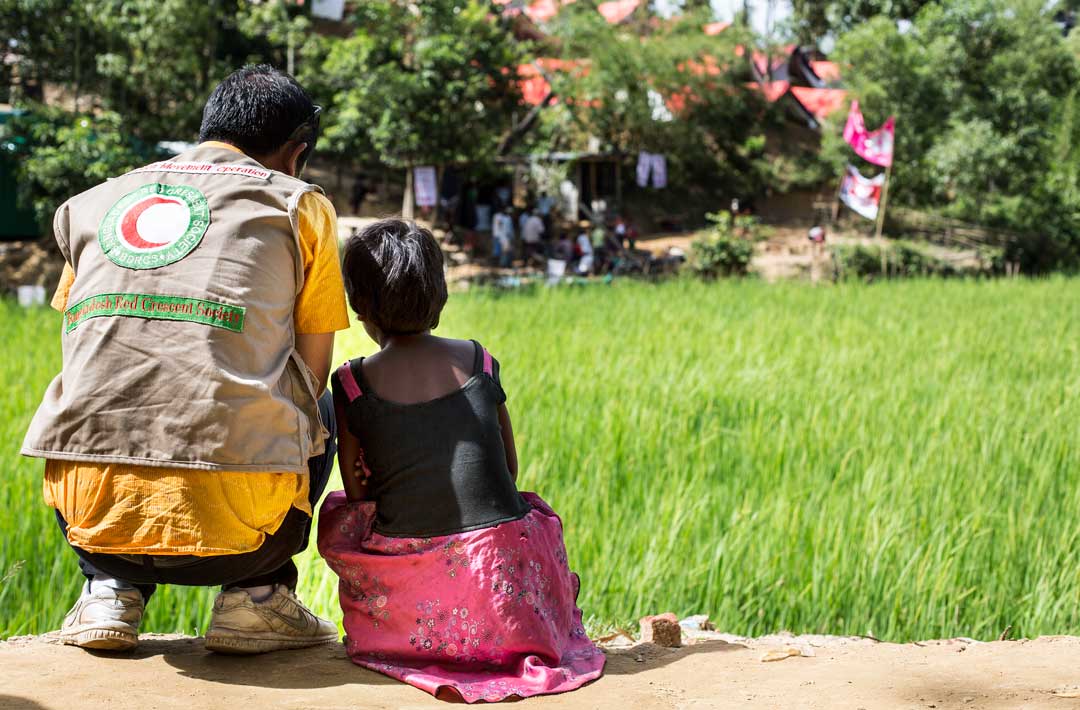
As the IFRC, we are not necessarily a peace building organisation or are mandated to work in conflict areas. As a membership organisation whose members are there before, during and after any crisis, we have a duty to work on building trust between communities and looking at the long-term provision of a culture of peace and non-violence. Within the IFRC, there is considerable experience illustrating clear and significant roles in preventing, mitigating and responding to interpersonal and self-directed violence. As the IFRC we are using this premise and experience to coalesce around the concept of protection in humanitarian action which is about keeping people safe from harm
 This changing protection landscape and the overall landscape around conflict raises the importance of protection (as a wide perspective) as part of IFRC’s action, and increased the need for clarity on the role and priorities of IFRC and its member National Societies in protection, especially as it relates to the work of ICRC and other specific protection-mandated organisations as well as the role in community violence prevention and in conflict.
To be prepared for the emerging future, the question is where can we situate the work of the IFRC and National Societies to identify and future current trends on protection-focused work of National Societies and support by the IFRC Secretariat, and situates those practices and approaches within the international standards and practice on protection?

This originally appeared here

Thursday, February 14, 2019

The Role of Interfaith Harmony in Today’s World

In his book21 Lessons for the 21st Century, Israeli historian Yuval Noah Harari laments that traditional religion is the “handmaid of modern nationalism.” It divides humanity into different camps, he says, and there is not much hope of religions offering solutions to global problems. This might be a hugely pessimistic attitude to consider, but as the UN’s World Interfaith Harmony Week takes places from February 1 to 7, these sentiments are not in isolation and should be disregarded at one’s own peril.
Originally conceived in 2010 as a chance for the global community to promote harmony between all people and to establish dialogue amongst different faiths and religions, it has long disappeared from the world’s agenda. Only the “converted” go about celebrating interfaith week with platitudes and statements. However, the mere fact that it hardly registers on anyone’s radar is testimony to not only the impact that the week has, but to a greater affliction affecting the faith community worldwide akin to what Harari alludes to in his writing.
Today, there is a loss of trust and hope in institutionalized religion providing some respite to tensions in global politics. At a time when there is a need to unite to address international problems, faith is plagued by local challenges creating a crisis of values, morals and, ultimately, interfaith engagement.
These challenges arise as we are increasingly living in an age of disruption that affects the way we communicate, do business, and how we relate to each other. Thanks in part to globalization, we are now experiencing the disruption of the social fabric that helps individuals define themselves and assess their social roles.
In one sense, that doesn’t seem to be such a bad thing because we have seen the upending of traditional structures of authority, the relocation of centers of power and the emergence of a flood of perspectives on how life should be lived. Yet primarily because of these disruptions that have unanchored lives and challenged traditional structures and networks, we see a backlash of increased racism and xenophobia amidst a wave of nationalism incapable of dealing with globalization. In addition, we see a growing globalization of fragility that is creating new forms of vulnerability for communities.
With migration, climate change and mental health all being seen as top priorities for 2019, the battlefield for tackling vulnerability is not defined by geography. It is on our streets, in our hospitals, in our schools and in our places of worship. In 2019, vulnerability will be easily defined as the rise of pandemics, along with greater disparities between rich and poor, men and women, rural and urban communities, and even this generation and the next.
Our search for a social identity has become a paradox remaining fluid in the midst of the increasing mobility of people, as well as the ease of global communications that make it possible for everyone to live everywhere. As a result, huge new multicultural populations are emerging around the world that have mixed identities shaped by multiple competing factors.
The loss of the moral compass from those in charge is compounded by a general loss of authority as it is no longer clear who is in charge. With the loss of authority comes a threat of security, compounded by the challenge on national unity by division based on religious, ethnic and tribal identities and new ideologies of nationalism. This is what Harari talks about and precisely what this week should focus on in terms of creating a space for dialogue around interfaith harmony.
Whilst faith is seen as a cause of turmoil and exclusion, it can be used as an antidote. New solutions can be developed to challenge people to create equal opportunities for diverse communities of ethnicities, traditions, cultures and faiths. As sociologist Ali Shariati put it: “Religion is an amazing phenomenon that plays contradictory roles in people’s lives. It can destroy or revitalize, put to sleep or awaken, enslave or emancipate, teach docility or teach revolt.”

Why faith? Why now?

In his talk around the future of education at the World Economic Forum in 2018, Chinese billionaire Jack Matalked about the need to revisit the teaching of values in the face of increasing automation. This is an inherent USP for religious teachings and institutions to make themselves more relevant again. Religious practices and perspectives continue to be sources of values that nourish ethics of multicultural citizenship, commanding both solidarity and equal respect. Historically, spiritual heritage has often provided humanity with the capacity for personal and social transformation. Simply put, for many people around the world, faith is embedded in cultures, practices, traditions and community values.
Thus today, as we experience dark moments, religion can appear to shine like a beacon of hope and reliability. Hence, interfaith week should once again discuss this idea that religions provide trusted institutions that have their bases of legitimacy in the divine order of the universe and in the societies they have nourished and been nourished by. As a repository of symbols, a system of belief, a convergence of cultural rights, a structure of morality, an institution of power and one that challenges old systems, faith should once again explore how it can offer people a sense of community, a trusted authority and meaning for their lives.
Religious institutions need to become mediums for inclusive engagement, as they offer simple and easy access to communities, as well as a simple language to express the commonalities of existence through the expression of common values, the invoking of social responsibility and working together on issues of social justice and ethics. Thus, rather than just discussing interfaith engagement, we need to speak about action that speaks to a concept of inclusion around religious identity. One that works on the premise of building an understanding of religious pluralism, founded on common features in a language spoken by most people, setting the agenda for creating a new, improved environment.
As religion can cut across class, ethnic, geographic and cultural lines, religious leaders can serve an important — if sometimes informal — representative function. Members of a religious community have an enormous capacity to increase their cultural, social and economic links with one another and with other religious and secular partners in other parts of the world.
Religious identity can thus serve as a powerful bond amid the vicissitudes of globalization, and one reinforced by ethical commitments embedded within a particular tradition. Working on a diverse shared polity of pluralism means you can tap into a hidden channel for creating engagement between people. This can allow us to find new ways to anchor ourselves in a connected world. In the turbulent waters of the global era, religion, which has its basis in the past, can provide solid ground and protection.
World Interfaith Harmony Week offers us an opportunity to do so. We have to address the challenges and the polarization that is tearing apart the fabric of the global community. This will never be easy, but it remains vitally important. Given the uncertainty we face in 2019, there is a greater need for such spaces to pause and reflect on how to create a new environment for the promotion of inter-religious and inter-cultural dialogue, as well as understanding and cooperation for peace.

Everyone’s Responsibility

Incidents around the world — whether violence in the Middle East, anti-immigrant sentiment in Europe, the rise of racist nationalism in Asia or xenophobic rhetoric worldwide — emphasize the need to build societies that are shared by everyone. These “shared” societies are uniquely imagined as places where durable peace is maintained through values of compassion and solidarity and by encouraging the promotion of dialogue amongst the different forums available in all cultures.
This is of course the idealistic aspiration behind World Interfaith Harmony Week, but with a realistic recognition that it requires real work from all stakeholders that constitute society as a whole. In other words, it is not the purview or responsibility of one component but rather everyone. There needs to be real and fruitful conversations that involve talking to people and understanding how to address the misperceptions that exist about the “other” within all of us. We need to have honest and open discussions about faith and its role in society and what exists within the faiths of mutual coexistence. This centers around common values that espouse the notion of a shared humanity, social responsibility, social justice and ethics.
In essence, we have to rediscover a spirituality of commonality that will allow us to recognize the common space and substance amongst all doctrines, which will provide the fuel for social change and trigger action for the unity of humanity. This shared language will enable us to develop a set of ideals that continue to stir our collective conscience; a common set of values that bind us together despite our differences; and a running thread of hope that makes this improbable experiment of reconciling and rehabilitation of vulnerable communities possible.
These values and ideals will have to be living, which cannot find expression on paper or monuments or in the annals of history books, but which remain alive in the hearts and minds of people inspiring us to pride, duty and sacrifice. These living values will have to help us build on shared understandings and should be the glue that binds every healthy society together. However, whilst dialogue is a beginning, it is important that engagement goes beyond this. Interfaith — and increasingly intra-faith — dialogue must produce something tangible for communities on the frontline
We are now living at a time where increasingly across the world, political violence flavored by faith, culture and identity is being used to justify positions of power. This often leads to misconceptions and misperceptions about certain faiths and its followers. The tragedy will be if we lose this battle. Faith identities will continue to be part of the picture and faith will be a strong rallying point for global communities. As people of faith and spirituality, we have to retake the reins and change the paradigm.
This was originally published in Fair Observer

Sunday, January 13, 2019

Living from the Inside Out


All of us are on a journey trying to live our life from the inside out.  Though our methods of transportation maybe different, we are all travellers on the same path towards spiritual enlightenment and happiness.  The ultimate and most difficult lesson to learn on this journey is to understand our destination and the steps that are needed to get there. 

We all know the story of how Sir Isaac Newton discovered gravity under an apple tree.  This ‘eureka’ moment helped him to postulate that the Universe is actually made up of small and large objects that are in a constant ‘tug of war’ with each other, i.e. they are constantly attracted and repelled from each other. He called this theory ‘the theory of gravity’ which forms much of the basis of physics we learn in schools. However, after many centuries, Albert Einstein in trying to understand how gravity actually works noticed a small problem with the Newtonian Theory of Gravity which stated ‘that if one were to drop an Apple, it will move in a straight line toward the centre of the Earth’.  The problem that Einstein noticed was that the Earth rotates around its axis.  Thus according to Einstein, when one drops an apple, it does not just fall in a straight line, but would also rotate with the earth. This is analogous to dropping an apple from outside a fast moving car or within a fast moving car.  If dropped outside a fast moving car, it would fall at an angle compared to it being dropped inside the car.  Einstein went a bit further and postulated that since the earth moves around the sun, a falling apple would not only rotate with the earth (in an angular movement) but it would also move around the sun. So an alien in space would see the apple ‘moving’ in many directions and not just ‘falling’.  This was the beginning of his general theory of relativity which stated that ‘what is observed is dependent on the reference point OR from where it is observed’. This means in the case of the Apple, if Jack was to drop an Apple, he would observe the apple falling relative to him.

So the first step in understanding this journey from inside out is that everything is relative.

Einstein also came up with his theory of Special Relativity which incorporates the principle that the speed of light is the same for all inertial observers regardless of the state of motion of the source ie   E = mc2 which states that the speed of light is the fastest speed possible in the Universe.  Calculations show that the light takes 8 minutes to reach the earth from the sun. So when we look at an object, we are looking at the light being reflected from that said object.  Thus when we look at the sun, what we actually see is the light from the sun which has taken 8 minutes to reach us from the sun.   Equally when we look at the stars at night, we are looking at them approximately a million years ago since this is how long it takes for light from the stars to reach us.

So what does this mean? You can never see objects like the sun in the ‘present-tense’, unless you touch it thereby eliminating the space between the objects (the observer and the observed).  This was the basis for Einstein to link ‘space’ with ‘time’ which means that to completely describe an object or its state, we need to know both its space and time. So whatever we do is present, and all we observe is the past, i.e. it is gone to the past. So we are the only present and everything we observe is the past!

So the second step in recognising living inside out, is that whatever we are seeing that is taking place has to some extent already happened, and we are just seeing it now.

Newton’s third law explains about the ‘cause and effect’ theory which means that when we let go of the apple from a high place (cause), the Apple falls to the ground (effect). When the Apple hits the road hard (cause), it breaks up into many pieces (effect). So dropping an Apple is a ‘cause’. The apple falling is an ‘effect’ due to us dropping it.  The apple breaking is an ‘effect’ of the ‘cause’ of hitting the ground.  However, have you ever thought about questioning WHY the apple should fall?  Why doesn’t it turn into a bird and fly off? After all the apple changing into a bird is also an ‘effect’ of the ‘cause’ of dropping the apple. Thus there is a ‘link’ between a cause and a specific effect.  This link explains the ‘why’ which the famous philosopher Nietzsche more than 100 years ago, stated that we cannot explain the how and why this ‘link’ works the way it does and what links each cause with each effect.

So the third step is that there is a link between what has happened (‘effect’) and what has been done (‘cause’).

Here is an interesting conundrum.  Let us say you and 2 friends go out for dinner.  After dinner, your bill comes up to £25. Since there were 3 people, you each pay £10 to the waiter. The waiter returns with your change of £5. You decide to give the waiter a £2 tip for his wonderful service and each of you took back £1. So the question is: How much did you pay for the dinner?  The answer is simple, since you gave £10 each and you took back £1, you paid £9 each (£10-£1). Simple, right?  But wait a minute, there is a problem. If each person paid £9, therefore, the total paid by the 3 people is £27 (£9x3). And since you gave the waiter a tip of £2, therefore the total amount paid is £27 + 2 = £29. But you paid a total of £30. Where did the extra £1 go? Did the waiter steal it? Can you answer this supposed illogicality? Or is your mind just playing tricks with you?

So the fourth step in living inside out is that things are not as they seem and sometimes we see the world differently to how it appears.

So what do all these steps mean in contributing to a living inside out? Just like the world we observe, which has to be viewed with a clear vision, we will need clarity and a proper framework when we think or reflect on matters. We have to be aware of all opinion before developing our own, since all ideas are relative to a base and viewpoint from which they are all built and there are many bases available to us. We need to know how our idea is different to others and we need to know how to connect them with others within our knowledge. We should also be aware of the time and the space when our ideas were developed and its relevance to the present and in particular the future, since it is the future we are concerned about and not necessarily the present.  We should be humble enough to acknowledge that for every cause, there is an effect and sometimes we make mistakes and our thinking process can sometime deceive us, i.e. there are times when we lie to ourselves!

In short these steps identify that living inside out is as much as the process as is the destination and it is important to focus on both.  For those of you who have read The Alchemist by Paulo Coelho, the understanding of this destination is very simple: ‘Go; travel the world, look for the truth and the secret of life – every road will lead you to this sense of initiation: the secret is hidden in the place from which you set out’.  Thus you find your destination only by rediscovering the essence of your own nature. The essence of your own nature is the ‘return to oneself’ with a consciousness of the other and a humility to recognise the steps needed to reach that destination.

 A wise man once said, ‘Between every stimulus and response there is a space.  In that space lies our freedom and power to choose our response.  In those choices lie our growth and happiness.’

Such is the meaning of profound spirituality and the need to live inside out requiring man to acquire a force of being and doing.  Hence within this space everyone is asked to take up a dialogue with The Most-High, a dialogue of intimacy, of sincerity, of love.  Within this space is the horizon of all spirituality requiring man to acquire a force of being and doing, rather than to undergo despotic relentlessness of a life reduced to mere instinct.  Within this space, we marry the purpose of our existence with the purpose of our subsistence.   Living inside out, we must comprehend the message: You are indeed what you do with yourself. You are responsible for the actions you take.

Hence the steps towards living inside out and its destination is to serve humanity, those in need; those without! That purpose is to awaken our conscience in the proximity of the wounds and the injustices people face! That purpose is to move away from selfishness / greed and waste; to distance our selves from the darkest dimensions of our being, our violence, our jealousies, our superficialities.  That purpose is to face our responsibilities with confidence and assurance
Thus responsibility is placed upon the shoulder of the individual to take the lead in becoming a true citizen of the country and of the world, where he / she rise above their narrow confines of individualistic concerns to face the broader concerns of all humanity and to redress the contradiction of society enabling people and their communities to live in dignity, peace and independence with social justice.

This contradiction of society will be redressed when all citizens come together confident in their universal principles; strengthened by their common values; they will be defenders of pluralism in their society and respectful of identities of others; they will take up the challenge of joining forces in a revolution of trust and confidence against the tide of discrimination and intolerance and poverty.

A shortened version of this appeared on the Spirit of Humanity Forum


Sunday, January 6, 2019

A better response to humanitarian crises

The year 2018 ends much as it began with a sad reminder of the fragility of communities facing crises. The volcanic tsunami of Krakatoa in Indonesia, following earthquakes and earlier tsunamis there, reminds us of the unprecedented changes, challenges and opportunities that we are facing.

Our world is hurting due to a globalisation of fragility, with the world less peaceful due in part to the rise of conflicts within states, the rise of terrorism, and increasing levels of criminality. The picture gets more complex with the changing nature of armed conflict – the rise of internal conflict within states, and the rise of terrorism (including lone actor terrorism) which can occur anywhere. The battlefields of today are not defined by geography but are in our streets, our hospitals, our schools, and our places of worship.

Add to that the fact that the number of displaced people and refugees is the highest since the end of the Second World War. It stood at 66 million at the end of 2016, up by 10.3 million in just one year. We also see it in the growing numbers of people alienated economically and socially within their own societies who are on the periphery, people who are voiceless and vulnerable. Other factors affecting societies include a rise of mental illness, of non-communicable diseases, in the rising national disparities between rich and poor, men and women, rural and urban communities, and even between generations. The consequences of climate change are becoming ever more apparent with unprecedented floods, heatwaves, and droughts.

The globalisation of fragility can be seen through a fragility matrix of underpinning issues. One one side of the matrix, you have the search for social identity (particularly in multicultural populations with mixed identities), accountability (where it’s no longer clear who is in charge) and security (where new ideologies of nationalism have emerged based on sectarian and tribal interests).

These three foundational issues will then intersect with key strategic issues such as people, cities and resources (today’s 50% urbanisation will reach 60-70% by 2030), income inequality (half the world’s population – over 3.5 billion – still live on less than US$3 a day, and climate change (not just increasing global temperature, but ancillary effects such as water supply and food scarcity).

In addressing this complex matrix, we need to be aware of a number of future limiting factors. Firstly, the financing the management and resolution of these global challenges will continue to be a source of concern. The gap between humanitarian and development needs continues to grow, and yet is still reliant on a few traditional sources of funding amidst reduced public budgets and support for aid. UN estimates suggest that developing countries will need more than $2.5 trillion a year to achieve planned development goals by 2030 and that the vast majority of these funds will have to come from nongovernmental, independent, or private sources. How do we mobilise these alternate sources of capital?

One such instrument is Islamic Finance and Islamic Social Finance with assets, globally estimated at $2.5 trillion annually. The potential for zakat, sadaqah, waqf and sukuk lie in addressing the needs and demands. Emerging financing models provide a much wider and more uniquely operated and distributed pool for developing countries. They range from equity-based crowdfunding campaigns to smart remittances, impact investment and mobile money to FinTech applications such as Blockchain and cryptocurrencies, which can provide a part of the solution to address the financing gap and to disrupt traditional finance players.

Second, the future of participation dictates that communities change the way they engage with social, humanitarian, and development causes. As people increasingly live horizontal, connected lives (whereas governments and large institutions function vertically), traditional linear approaches of information sharing become disrupted as emerging technologies democratize information access, participation and agency. For example, during disaster responses many citizen-led groups, coordinated and amplified by social media, self-mobilised and responded to people’s needs independent of formal institutions and often more effectively. How do we engage with and connect to communities wanting to respond and participate? Clearly there has been a shift in power, decision making, and information sharing and distrust of large institutions will need to be overcome.

Finally, the future of technology is transforming how people live and work, with broad implications for community support and development. Machine learning and other technological advancements can help forecast disasters and crises and provide stronger sources for analysis and insight. But there is a risk that benefits will not be felt by all and the digital divide can create further inequality and exclusion. Artificial intelligence algorithms that might further perpetuate inequality and data privacy are already forcing humanitarian organisations to re-think how they handle the data. And as development sector operations and structures increasingly rely on digital platforms, we will face greater risks in protecting that data and our operational mechanisms.

These problems are not infinite, but require a different type of thinking and approach for us to consider going into 2019. We will need to stop solving 21st century problems with 19th century solutions.

This was originally published on the Concordia Insights