Showing posts with label conflict. Show all posts

Wednesday, March 6, 2019

The Future of Protection

We are in a period of the globalisation of fragility. The definition of protection, its scope and limitations, the role of humanitarian agencies, authorities and other actors has been and continues to be debated. Within the Red Cross Red Crescent Movement, interpretations and practice on protection is also diverse and varied but the aspect is to explore it in a wide perspective around Do No Harm and keeping people safe, considering how National Societies (NS) have always engaged in wide range of protective actions, and in response to increasing conflict, displacement and migration, some are increasingly active in certain fields.
DRIVING TRENDS

A cursory glance at the 2017 Global Peace Index (The 2017 Global Peace Index) makes for very interesting reading. Though it shows a slight improvement from 2016 due to gains in six of the nine geographical regions represented, the Index records a less peaceful world over the past decade. Since 2008, the global level of peace has deteriorated by 2.14%, with 80 countries improving while 83 countries deteriorated.
One of the major trends recorded over the last decade and attributed to this decline has been the growing inequality in peace between the most and least peaceful countries. These trends show that the growing inequality in peace is largely attributable to the rise of conflicts within states, the rise of terrorism and increasing levels of criminality. As desperate people flee conflict zones, the impact of forced displacement is hitting neighbouring countries hardest and they are coping as best they can.   The number of displaced people and refugees is the highest since the end of the Second World War. While the first half of the 20th century was a major period of inter-state warfare and wars of decolonisation, the second half gave way to an era of predominantly civil conflicts. A little over 20% of the world’s population live in countries under the threat of large-scale, organised violence, according to the World Bank’s 2011 World Development Report.
Experiences over the last decade in many parts of the world illustrate the challenges that the changing nature of armed conflict poses for peace as the landscape and nature of conflict change. Challenges to the established order in different places around the world are rising, linked to diverse causes – political change, regional and national autonomy, urbanisation, climate change, faith and cultural identity, or securing the basic conditions of life. Underlying some of the causes for current conflicts are some cross-cutting characteristics, including the rise of violent non-state actors and the prevalence of civil wars; deep socio-political and ethno-religious conflicts; huge levels of mistrust and intolerance; constantly changing alliances, loyalties and relationships; changing frontlines and territorial control; destruction of social infrastructures and services; and links to natural resources.
We are moving into a period of globalisation of fragility.  For all the relative calmness and progress of the second half of the 20th Century and the early years of the 21st, we still see a world that is hurting due to increased fragility – fragility that is globalising at the pace of our fast-evolving world.
HOW WILL THIS PLAY OUT IN THE NEXT 10 YEARS?

Understanding how the different elements of risk interact with each other is fundamental to looking at the future of protection. The capacity to respond to challenges is necessary but not enough; and relying on crisis response is truly inadequate. It is essential to meet emerging problems upstream. We need to build systems that minimise risk and improve the human condition holistically.
As we look forward, we need to explore some key issues which raises questions around challenges for the concept of protection and the future of peace for the Red Cross and Red Crescent:
  • The scale and character of conflict is changing.  The distinctions between war and peace and who is a combatant and non-combatant are becoming uncomfortably blurred.  The battlefielf is both local and global. Modern conflict is hybrid in nature, combining traditional battlefield techniques with elements that were previously mostly associated with armed non-state actors. The Fourth Industrial Revolution offers individuals increasingly diverse ways to harm others on a grand scale such as cyber warfare / autonomous warfare. Current trends suggest a rapid and massive democratization of the capacity to inflict damage on a very large scale, challenging existing legal and ethical frameworks.  All of this raises questions around
    • What do we mean by peace? What is the definition of peace and what is a holistic version of this?
    • What do we mean by violent extremism and should we be dealing with it and if so what should our role be?
    • How can we work for conflict resolution and peaceful change in an era of renewed geopolitical division? Should we be playing a role?
    • What are the new ideas and initiatives on how to mediate conflict, but also in terms of fixing the relationships between the parties that stand behind those who are fighting?
    • How we remain true to an agenda that will transform people’s lives require supporting and working with those who work for peaceful change – in and out of government, in civil society, and including women and youth to help them:
      1. call for peaceful change;
      2. survive during conflict and maintain cohesion across conflict divides;
      3. rebuild their lives and their institutions after the guns fall silent;
      4. get involved fully and meaningfully in peace and reconciliation processes so that they can influence and live with the peace settlements that emerge.
This is a time of fundamental technological change. These rapid advances in technology are providing more than new capabilities – they are changing the way we live, work and relate to one another. The future (and the present) is digital: Humanitarian organizations are progressively becoming more digitally present, and able to leverage larger amounts of data from both offline and online groups of affected people.  What does this mean around protection and the future of peace? Do we need to talk about new norms and conventions that will protect civilian and affected community interests: a ‘Geneva Convention’ for the digital world which will be a critical first step to addressing a greater set of challenges around digital freedoms? In 2018, we’re only just beginning to understand how the digital revolution will alter the make-up of our societies and lives. We need to be asking ourselves what a free society looks like in a digital world and what forms our democratic rights take online. It’s no longer just our right to assemble peacefully offline that needs to be protected, it is also our right to assemble and mobilize online.
How can we learn how to build and develop trust with affected people, including in the digital space? Arguably, trust can only be achieved with some level of delivery, a degree of openness, transparency and a predisposition to learn. This includes more willingness from us to take criticism on board, reflect and act on it. However, what trust really means in the context of relationships between affected people and humanitarians, particularly in conflicts and situations of violence, remains poorly understood. Similarly, how it is to be built and developed, including in the digital space, is lacking. We need to examine and consider how to build “virtual proximity” and “digital trust” to complement our physical proximity.
How do we continue to ensure to build credibility and trust from the public that is fatigued by crises? How will we sustain operations in a large number of ignored or forgotten crises where human suffering may be at its greatest? If fragility and extreme poverty continue to concentrate in certain countries/regions, how do we better allocate our resources/efforts globally to support this? How do we structure and prepare our organisation, its people and skills for a scale up of activity to address needs in these contexts? 
How will RCRC manage complex cross-border responses with national organisational models? 
How will RCRC support displaced populations and those moving back to home countries with tailored 
and targeted support services that incorporate reintegration, livelihoods, health and education?
IMPLICATIONS FOR RCRC

As the IFRC, we are not necessarily a peace building organisation or are mandated to work in conflict areas. As a membership organisation whose members are there before, during and after any crisis, we have a duty to work on building trust between communities and looking at the long-term provision of a culture of peace and non-violence. Within the IFRC, there is considerable experience illustrating clear and significant roles in preventing, mitigating and responding to interpersonal and self-directed violence. As the IFRC we are using this premise and experience to coalesce around the concept of protection in humanitarian action which is about keeping people safe from harm
 This changing protection landscape and the overall landscape around conflict raises the importance of protection (as a wide perspective) as part of IFRC’s action, and increased the need for clarity on the role and priorities of IFRC and its member National Societies in protection, especially as it relates to the work of ICRC and other specific protection-mandated organisations as well as the role in community violence prevention and in conflict.
To be prepared for the emerging future, the question is where can we situate the work of the IFRC and National Societies to identify and future current trends on protection-focused work of National Societies and support by the IFRC Secretariat, and situates those practices and approaches within the international standards and practice on protection?

This originally appeared here

Monday, February 29, 2016

World Humanitarian Summit 2016: How to better engage peacebuilders and humanitarians

In preparation for the World Humanitarian Summit(this link will open in a new window) (WHS) in Istanbul in May, Secretary General of the United Nations Ban Ki-moon released his vision(this link will open in a new window) for tackling major global challenges.
The report, titled One Humanity, Shared Responsibility puts forward an ’Agenda for Humanity’ posited around five key central responsibilities:
  1. Global leadership to prevent and end conflict;
  2. Uphold norms that safeguard humanity;
  3. Leave no one behind;
  4. Change people’s lives – from delivering aid to ending need;
  5. Invest in humanity.
Some may accuse these of being lofty ideals, but the agenda is really about re-thinking how humanitarian assistance should be delivered in the wake of some of today’s greatest challenges.
For example, in 2015 alone, 125 million people required humanitarian assistance worth $20 billion, with 60 million being forced from their homes (and most expecting to be displaced for an average of 17 years).
In the last decade, most humanitarian crises have taken place in conflict situations, as highlighted by the Secretary General in his call for political leadership to solve conflict.
In most cases, conflict means that access and delivery of protection and assistance carry greater risks, and thus require more complex navigation, difficult choices, compromises and pragmatism when it comes to adhering to core humanitarian principles.
In places such as Syria, South Sudan and Central African Republic (CAR), respect for the protection of civilians from harm is increasingly becoming jeopardised by pragmatism, if not realpolitik. Experience in Iraq and Afghanistan has changed traditional humanitarian operations and in particular, the ‘stabilisation’ agenda that many donors have inadvertently pursued, and has altered perceptions on politicising or securitising humanitarian operations.
In addition, the impact of many counter-terrorism legislations such as that implemented by the US, means that humanitarian agencies (both local and international, especially faith-based organisations) are banned from direct engagement with organisations and groups linked to listed terror groups (such as Hezbollah, Hamas, Al-Shabab, etc.).
Similarly, cash transfers programmes either through diaspora remittances (e.g. Dahabshill in Somalia) or from international aid agencies in conflict zones where there are terror groups continue to be restricted or banned.
This does has implications for neutrality, independence and impartiality especially if engagement with such groups enables access to potential beneficiaries in need of help. For example, international aid agencies have faced challenges in engaging with local relief actors (NGOs and local businesses) operating in Al-Shabab controlled areas of Somalia over fears those actors directly or indirectly, through payment of Islamic Zakat taxes for instance, sustain Al-Shabab’s control. The same issues were present during the conflict in Sri Lanka, for those working in areas controlled by The Liberation Tigers of Tamil Eelam (LTTE).
In its submissions to the Summit in Istanbul, Alert recognises these challenges as well as the impact that humanitarian assistance could have on conflict.
We argue that whilst many humanitarian actors are not peace actors and do not have the skills to build peace, they could reinforce the role of peace actors and contribute to peace. Hence, there is a need for greater engagement between the peacebuilding and humanitarian communities. This engagement should go beyond just avoiding immediate harm but also towards building resilience to conflict.
After all, humanitarian action and peacebuilding are not entirely binary concepts – one being neutral, the other – political.
In fact, neutrality and impartiality are often central to peacebuilding. Without an inclusive dialogue that engages all relevant parties, it is not possible to effectively address the underlying drivers of conflict. Independence is another essential characteristic for peacebuilding actors that underpins the trust of parties involved. While the spotlight often falls on multilaterals or sovereign states, it is less widely known that non-government organisations often play a central role as intermediaries where engagement by sovereign states presents challenges for conflict resolution.
The difference, though, lies in how principles are constructed. Humanitarians strive to maintain a public image of neutrality, impartiality and independence at all times, whereas this may vary for peacebuilders depending on the intervention and context. In reality though, the degree of neutrality, impartiality and independence can vary for both peacebuilders and humanitarians.
Independence, neutrality and impartiality are subjective. It is possible for an organisation to behave in a way that it is completely neutral, but still be perceived as partial depending on identity, allegiance, culture and beliefs. ‘If you give aid to my enemy you are supporting the other side’ is a common view.
In Afghanistan in particular, humanitarian intervention was seen as ‘one-sided,’ since the humanitarian community did not negotiate access with the other side, nor openly advocate for the respect of humanitarian principles by all parties to the conflict.
However, humanitarian assistance provided by the international community will often be seen as supporting one side, depending on political allegiances and funding. In response to disasters caused by natural hazards where on-going conflicts exist, humanitarian action can be politicised.
By understanding how our interventions impact others we can anticipate and respond to perceptions, avoid unintended repercussions and therefore reinforce humanitarian principles.
If we do not strive to understand how politics intersects with our assistance, we can undermine the principles we are trying to uphold. Shared conflict sensitivity processes can therefore assist both humanitarians and peacebuilders in their work.
Certainly, all this requires commitment and consensus from not only donors, but agencies from both sides of the spectrum.
There is a need for a more embedded and cohesive approach to conflict sensitivity within humanitarian policy frameworks. There is also a need for a paradigm shift. Conflict analysis must become a standardised practice that not only reinforces the ‘do no harm’ principle during operations, but identifies opportunities for peace between two sides whilst building community resilience to conflict.
Connecting humanitarianism and peacebuilding in practice is not something that is just desirable but essential for improving the effectiveness of humanitarian operations, the promotion of humanitarian principles and the common goals of humanitarian and peacebuilding organisations.
Due to the often urgent nature of humanitarian interventions and protracted chronic crises, a solid institutional framework for conflict sensitivity at all stages of intervention must be established in order respond rapidly to changing circumstances.
We must also change organisational culture, increase capacity, get policy and funding settings right and test and analyse what works.
Peacebuilders, through various measures, must also take responsibility for making the partnership work. They need to have a better understanding of how humanitarians operate, and the systems and constraints they work under, in order to understand how to support their integration of peacebuilding and conflict sensitivity. We must capitalise on new opportunities and trends within the humanitarian sector.
Ultimately, both humanitarians and peacebuilders need to acknowledge and commit to changing their approaches. This will help to unlock the potential to contribute more explicitly to positive peace – to ‘build back better for peace’.
For this to happen though, we need leadership from all parties, as stated in the starting premise of the ‘Agenda for Humanity’. Investing in stability and resilience will mean incorporating peace before, during and after humanitarian operations.


This originally appeared here

Wednesday, January 27, 2016

Making Sense of Future Conflicts

As the world becomes more urbanized, it is important to meet conflict challenges before they arise.
A cursory glance at the 2015 Global Peace Index (GPI) makes for interesting reading. The GPI shows that the world has become less peaceful since 2008, which is largely attributed to the increase of conflicts within states, the rise of terrorism and the hike in crime rates.
The number of displaced people and refugees is the highest since the end of World War II. Though the long-term trend in peacefulness is positive—in the sense that there has been a marked and persistent downturn in levels of violence and conflict since 1945—the number and intensity of high-profile wars and atrocities in the short-term have increased.
So how does one explain this anomaly?
Simply that the nature and landscape of conflict is changing, as has been shown from experiences over the last decade. Conflict as a result of challenges to the established order in different places around the world is arising due to diverse causes: political change, regional and national autonomy, urbanization, climate change, faith and cultural identity, or securing the basic conditions of life.
While the first half of the 20th century was a major period of inter-state warfare and wars of independence, the second half gave way to an era of predominantly civil conflicts.
An authoritative estimate from the World Bank is that 1.5 billion people—just over 20% of the global population—live in countries under the threat of large-scale, organized violence, whether perpetrated by terrorists, state forces or criminal gangs.
The latter, in particular, symbolizes a new and emerging threat and means that many conflicts appear to be chaotic, multisided, not necessarily political, and in many cases, a confusing amalgam of crime, politics and business. Crime, violence and the wider social and political instability thus produced will continue to threaten human security, raising the prospects for new forms of conflict.
While politics, faith, identity and rights are often the foreground factors for any conflict—these are the issues that people fight for and against—it is important to pay attention to the long-term systemic issues that increase conflict.

URBAN CONFLICT

One issue that will affect long-term conflict dynamics involves “people, cities and resources.” The world’s population passed the 1 billion mark in 1810, doubled in the next hundred years, and by 2010 was about 7 billion. The projection for 2050 is 9 billion. But the issue here is not pure numbers—it’s resources.
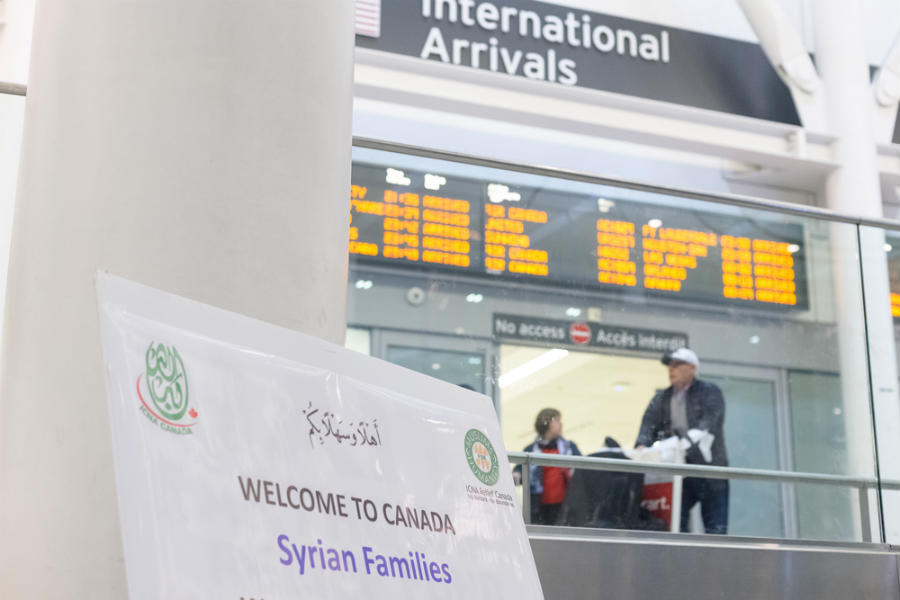
Syrian refugees in Canada
 © SHUTTERSTOCK
When the global total reached 1 billion, just 3%—30 million people—lived in cities. Today, the world is 50% urbanized; 3.5 billion people live in cities.
Urbanization per se is by no means bad, but it provides a different set of issues with regard to conflict. The prospect of “shadow” economies, the connections between the violence driven by politics with the relentless drive for money, and the status that comes through criminal gang violence all leading to conflict poses areas for concern. With weak state institutions, the violence becomes cyclical and relentless as criminal violence is traditionally met with the violence of law enforcement. Violence on violence.
It is hard to manage stressful change without adequate institutions and systems for doing so, which are lacking or deficient in many countries. Deficiencies in resilience are to be found at every level. Local, national and international arrangements and institutions that may have functioned reasonably well to date now face challenges they were not designed and equipped for. Furthermore, this is happening against the background of political change and instability in countries globally.
Understanding how the different elements of risk interact with each other is fundamental to conflict analysis, and to understanding what can be done to build peace in any particular context. The capacity to respond to challenges is necessary, but relying on crisis response is inadequate.
It is essential to meet emerging problems upstream—such that people can pursue conflicts without violence and harm to themselves or others. Thus, peaceful societies are when people can live in safety, have fair and effective laws, participate in shaping political decisions, make a decent living, and secure their well-being.
In order for this to happen, there needs to be strong advocates for creative dialogue, and diplomacy that understands the context and addresses civic empowerment. These should ultimately lead to the view that conflicts can and should be resolved peacefully as much as is humanly possible. And where and when that proves impossible, every effort must be devoted to returning to a situation in which violence does not threaten every person’s safety and well-being, and in which conflicts can be handled by dialogue, discussion, the law and settlement.
Dealing with conflict and building peace is about the long-term. While political leaders’ decisions are required to make these unfold positively, change does not come about at the flick of a switch. Similarly, while peace is most likely and strongest when many individuals gear their actions toward peacebuilding, the effects of activism are not necessarily quick or linear. Rather, change is indirect, incremental and cumulatively transformative.
This originally appeared on Fair Observer

Tuesday, November 17, 2015

Understanding Conflict Dislacements

A phenomenal number of people have been displaced as a result of conflict. It is now estimated by the UN that almost 60 million plus people have been displaced, making it the highest since 1945 (World Humanitarian Summit). On top of this, it is now estimated that it will take about 17 years on average for people to be displaced, which means that the refugee crisis becomes prolonged putting a strain on humanitarian financing. Already this is beginning to show for example out of total $19.5bn pledged by the UN in 2014, less than 70% UN funding requirement were met last year, leaving $7.5bn in unmet funding gap.
Underlying some of the causes for current conflicts are some cross-cutting characteristics including: the rise of violent non-state actors and the prevalence of civil wars; deep socio-political and ethno-religious cleavages; huge levels of mistrust and intolerance; constantly changing alliances, loyalties and relationships; changing frontlines and territorial control; destruction of social infrastructures and services; and links to natural resources. In many cases where there has been a cessation of violence and hostilities, peace agreements and the accompanying international apparatus to support their implementation have suppressed the violence but not addressed the causes of conflict. Accordingly, the risk of a re-eruption remains. One of the best indicators of where there is risk of future violent conflict is simply identifying where there was violent conflict before.
Whilst politics, faith, identity and rights are often the foreground factors for any conflict (i.e. these are the issues that people fight for and against), it is important to pay attention to the long-term systemic issues that increase conflict. In a nutshell there are possibly three strategic issues that will affect long term conflict dynamics (International Alert 2015) :

1)The world's population passed the 1 billion mark in 1810, doubled in the next hundred years, and by 2010 was about 7 billion. The projection for 2030 is 9 billion. But the issue here is not pure numbers - it is resources. When the global total reached one billion, just 3% - 30 million people - lived in cities. Today the world is 50% urbanised - that is 3.5 billion people live in cities. Projections put the percentage in 2030 at between 60 and 70% - over 5 billion. Urbanisation per se is by no means bad. Cities have many problems, but their emergence and growth is strongly and directly associated with growing literacy, a deepening culture, increased cooperation and social mobilisation for progress on political rights. However, growing urbanisation is also associated with increased output: economically, urban concentration is much more efficiently productive than rural decentralisation, which means increased consumption of natural resources. In addition, growing urbanisation provides a different set of issues with regards conflict. The Global Status Report on violence prevention 2014 shows that within low- and middle income countries, the highest estimated rates of homicide occur in the Americas , followed by Africa . The lowest estimated rate of homicide is in the low- and middle income countries of the Western Pacific .
2) Extreme poverty is conventionally defined as living on less than US$1.25 a day (in 2005 prices). According to the World Bank, 1.22 billion people were living below that line in 2010, down from 1.9 billion in 1990 - a major improvement, especially since the world's total population increased in the meantime. But 2.6 billion people live on less than US$2 a day and a total of 3.5 billion - half the world's population - on less than US$3 a day. Thus, while natural resources are consumed in abundance, half the world has very little. The problem is not just economic inequality but the unequal opportunities and access to what should be common goods, such as education, health services, clean water and safety, which flow from the economic facts. Further, the problem is not just inequality in all its dimensions, but the fact that today's information and communications technologies make relative wealth, status and prestige highly visible to those at or near the bottom of the pile. This is where the seeds of resentment lie that create fertile grounds for conflict entrepreneurs of all kinds. Countries where inequality is sharpest are often countries where inequality both fuels and is fuelled by the root and branch corruption of the governing system. Inequality is not a natural accident; it is a system of wealth and privilege that has been constructed, and is actively defended.
3) The consequent changes in our natural environment as a result of climate change has social, economic and, in many places, political effects. It thus offers new challenges to human security. Climate change is bringing more slow-onset pressures such as droughts, shifts in the timing of the monsoon in parts of south and Southeast Asia, and hotter summers and wetter winters in temperate zones. There will also likely be an increasing frequency and severity of sudden shocks - the extreme weather events such as hurricanes, typhoons and cyclones. These will put pressure on four strategic systems that are essential for the way we live:
• water supply;
• food security;
• energy supply; and
• natural resource supply chains.
These systems are also under pressure from other human-impelled changes in nature, such as the loss of biodiversity and the effects of different kinds of pollution. These changes combine to create many unknowns in the natural environment; in the long-term, economic progress is pushing up against the planetary boundaries of sustainability. It is not that life will become impossible, though some habitats will become functionally uninhabitable. Rather, these four strategic systems will become more vulnerable, more costly and more complex with conflict as one of the consequences.
Thus addressing the long term displacement means we need serious movement to tackle these three phenomenon.

This originally appeared in Huffington Post

Saturday, May 23, 2015

An African Answer to an African Problem

On the 12th of November 2010, a new documentary, ‘An African Answer’, featuring the reconciliation work done in Kenya of Imam Ashafa and Pastor James from Nigeria was released in London.  Those not familiar with the ‘The Imam and The Pastor’, will be struck by their story.  Emerging from the 1990s in Northern Nigeria after being in the frontlines of confrontations between Christians and Muslims which saw the killings of thousands in inter-religious warfare, Imam Ashafa and Pastor James are two of the most unlikeliest of allies, forging new grounds with their   Interfaith Mediation Center, responsible for mediating peace between Christians and Muslims in Nigeria's kaduna state.

Once bitter enemies, determined to kill each other (The pastor had his hand hacked off while defending his church against Muslims and the imam had his spiritual adviser and two of his brothers killed by Christian extremists), the two men are now embarking upon an extraordinary journey of healing and forgiveness.   Through talking to each other, they questioned the cost of the violence finding passages in the Bible and the Koran which showed common approaches of working together and more importantly started teaching about it to others, despite staying faithful to their religion.

In fact it is this demonstration of the importance of staying faithful to one’s own religious principles whilst reaching out to others of a different faith, is what has been the appeal of their story over the last decade or so.  This and the fact that their solution is a home grown solution that has not had any external influences, means they talk not only with credibility but with a refreshing sense of uniqueness.  This credibility is important especially for a continent that has suffered from being told how to solve its problems rather than being provided with a space and facilitation in order to solve the problem for itself.

An African Answer is a continuation of their story and how they have now transferred those skills outside of Nigeria, to helping the people in Kenya in the aftermath of the electoral violence  in 2007.  The video is a powerful testament to the fact that people in the developing world or the global south pretty much know how to solve their own problems if they can be provided a space to do so. 

Imam Ashafa and Pastor james are hardly candidates for setting an example for their country or for peace building or unlikely to be described, as they are now, by the Archbishop of Canterbury as ‘a model for Christian Muslim relations’ yet today their story is one about the power of the   responsibility placed upon the shoulder of the individual to take the lead in becoming a true citizen of the country and of the world, where he / she  can rise above their  narrow confines of individualistic concerns to face the broader concerns of all humanity and  to redress the contradiction of society.  This is not just something that should be left to the politicians or the institutions but really no one can be ruled out having a part in contributing. Ultimately the contradiction of society will be redressed when people come together confident in their universal principles; strengthened by their common values; defenders of pluralism in their society and respectful of identities of others, which means that they will take up the challenge of joining forces in a revolution of trust and confidence against the tide of discrimination and intolerance and poverty.
Michael Henderson in his book No Enemy to Conquer, captures their story more eloquently as he attempts to highlight  some of the lessons that their story tells us such as the need to move beyond the concept of a clash between each other to reaching out and developing an alliance with ‘the other’ .  This journey of forgiveness and reconciliation means to take an individual  responsibility to create a safe space for people to talk and share ideas.  This safe space entails not only moving beyond victimhood but also being cognizant of the past (accepting and facing up to the past honestly)

The story of the Imam and the Pastor shows that strong ethical commitment in religious traditions can sharpen identity politics but more importantly can form the basis of inter and intra faith collaboration.  Thus religious pluralism can not only lead to an absence of violence mainly due to better understandings and interaction but it opens a space for discussion, dialogue and engagement.  In short, we must learn to listen closely to one another, not simply because it is polite, but because it is just possible that we might learn something important about ourselves, and build a better global village in the process.

The story of Tansen, the master musician at the court of the Mogul Emperor, Akbar, sets an example of how listening can build understanding towards working with each other. He had some fifteen musical instruments in the Emperor’s chamber, which he had tuned to one frequency. Upon playing just one instrument’s musical note, the other fourteen started to resonate, to the astonishment and delight of the audience. Ideally this story serves a metaphor for how communities can work in harmony to achieve an enlightened result. Not everyone sees it that way. Certainly not every faith community is tuned to the same frequency, indeed, not every faith community has achieved harmony within itself but an opportunity exists through the promotion of working in partnerships with/between faith communities, to harness more cross-community collaboration, in the interest of peace, tolerance, and wellbeing.
In Cosmopolitanism: Ethics in a World of Strangers, Kwame Anthony Appiah, writes eloquently of the urgent need for ‘ideas and institutions that allow us to live together as the global tribe we have become’. The roots of all global crises can be found in human denial of the eternal principle of peace and in order to fight this denial there needs to be self-critical reflection.
Thus we need to be cognizant of the ‘other’ so that  we can come together on issues of commonality, as opposed to focusing on our differences. In the analogy of Appiah, addressing the challenge of religious pluralism in the world today requires careful positioning of these differences to create a compelling mosaic. Addressing these challenges offers an antidote to sectarianism and the polarisation of different faiths in multi-cultural societies . This will never be easy, but remains vitally important for, as Appiah illustrates, it involves creating the very ‘ideas and institutions that will allow us to live together as the global tribe we have become’.  This is perhaps the greatest lesson we can get from the story of the Imam and the Pastor.


This was originally published in The News Hub

Saturday, August 23, 2014

Who do you think you are

Incidents that have unfortunately plagued the world for decades but become more pronounced over the last 8 years or so, show an increasing ‘emphasis’ for political violence flavoured by faith, culture and identity where the world is seen through a singular lens of ‘good’ and ‘evil’ and  an ‘us’ vs. ‘them’ attitude.  This unhealthy uni-polar view, congruent to a ‘Clash of Civilisation’ concept, has led to ambiguities and complexities with regards the perception of current global conflicts and the pivotal role played in the popular mobilisations against the West from sections of disaffected Third World Opinion.   In particular, one key source of trans-national conflict has stemmed from the rise of political Islam as a force in international relations, the end of the Cold War and the emergence of distinct tensions between Western countries with a Christian heritage and countries, around the world, with a distinct Muslim heritage. 

Often one of the key catalysts for these global conflicts  and the ethnic / faith identity violence that stems from them, is the issue of poverty  and  the process of allocation of resources, which perpetuates the view through this singular lens and ensures that  a vicious cycle of competition is generated and maintained.  Many will argue though that in the globalising world of today such rivalry, competition, conflict and ultimately violence are a necessary tool to preserve the ‘values of freedom’.   However the violence we have seen to date has been perpetuated from deeply delusive and divisive assumptions of single exclusive identities by sectarian activists, who want people to ignore all affiliation and loyalties in support of one specific identity.    Such exclusive identities are negative, stressing difference rather than belonging and ‘opposition to’ rather than ‘support for’ something. Unfortunately whilst faith may rarely be the original source, it often becomes the arena in which conflicts are played out.  The result is that conflicts manifest themselves into rumour, hearsay and generalization which are the first steps towards the stereotyping of people (their faith, their culture and identity) and the denial of a diverse, lived reality, the opposite of respect, understanding and acceptance. As a consequence, faiths (beliefs, culture and identity) become judged by the attitudes and actions of small and aberrant minorities. 

It is precisely in this scenario with the world experiencing such kind of  turmoil, that there are calls for new solutions.  With the collapse of socialism, and now with the global financial crisis, an apparent sign of the failure of capitalism, this search for the new solutions has intensified, to look for answers outside the box that will address the turmoil and their causes. 

Nobel Laureate Professor Amartya Sen’s premise in his book ‘Identity and Violence’ is that the key to good citizenship and social cohesion is the encouragement and retention of multiple identities. People have several enriching identities: nationality, gender, age and parental background, religious or professional affiliation. They identify with different ethnic groups and races, towns or villages they call home, sometimes football teams; they speak different languages, which they hope their children will retain, and love different parts of their countries.   It is the recognition of this plurality and the searching for commonalities within this pluralism that will lead to greater respect and ultimately understanding and acceptance.

Thus these new solutions will have to challenge people to accept diversity and create equal opportunities for diverse communities, ethnicities, traditions, cultures and faiths.  The new solutions will also have to take into account  the existence of multiple identities which add a richness and variety to diversity and pluralism as part of a common wealth that needs to be celebrated in the global civil society and integrated into life as a positive force for development. 

The role of faith and spirituality in particular in the search for new solutions will be very important as it offers a simple and easy access to communities (strong in their spiritual and faith teachings) and a simple language to express the commonalities of existence and create the prerequisites for forgiveness, respect, understanding and acceptance.  Whilst dialogues are a beginning it is important that engagement goes beyond this, engaging practically with faith leaders and communities, to help resolve and avoid conflict and achieve gains that make a difference to people’s lives


In Cosmopolitanism: Ethics in a World of Strangers, Kwame Anthony Appiah writes eloquently of the urgent need for ‘ideas and institutions that will allow us to live together as the global tribe we have become’ (2006: xiii).  The roots of all global crises can be found in human denial of the eternal principle of peace.   In order to fight this denial there needs to be self-critical reflection.  Sir Richard Burton once wrote that  ‘All Faith is false, all Faith is true: Truth is the shattered mirror strown In myriad bits; while each believes his little bit the whole to own’ (The Kasidah of Haji Abdu El-Yezdi), where he meant that you will find parts of the truth everywhere and the whole truth nowhere.  The shattered mirror concept enables us to see that ‘each shard reflects one part of a complex truth from its own particular angle’. Our mistake in the world today is to consider ‘our little shard can reflect the whole’ (Ibid: 8).
This is the current problem with all spiritual and religious teachings that everyone thinks that their little truth is the whole truth.  However if we think in the grander scheme of things (beyond theology and ideology) to unite humanity with peace, respect and understanding, then each of us (with our faith and spiritual teachings) have a bit of that shard of broken glass. This can be pieced together on issues of commonality, as opposed to focusing on our points of difference. Then we would have made the first step towards  spiritual reconciliation between communities. 
Thus all of the differences mentioned above represent small shards of glass which, in the analogy of Kwame Anthony Appiah, require careful positioning to create a compelling mosaic.  The initiatives described above then offers an antidote to sectarianism, the polarisation of different faiths in multi-cultural societies and the potentially divisive effects of selective aid flows to particular faith communities.   In particular, the partnership between Muslim Aid and UMCOR represents a template for a large cosmopolitan mosaic seeking to piece together the broken shards of a greater truth of serving humanity.  There is a need to remain committed to engineering the software needed to work effectively in a range of situation. This will never be easy, but remains vitally important for, as Kwame Anthony Appiah illustrates, it involves creating the very ‘ideas and institutions that will allow us to live together as the global tribe we have become’.

Initially published in The News Hub


Wednesday, June 18, 2014

The Buddhist-Muslim Fault Lines in Sri Lanka

Just more than a year ago, I wrote about a new conflict  that was threatening to overshadow Sri Lanka’s post conflict reconciliation journey.  The fear was that the constant organized provocation by extreme Sinhalese Buddhist groups particularly on the Muslims would necessitate a response, thereby culminating in communal clashes of a severe magnitude.  The fear for many was that a repeat of the infamous  1983 ‘Black July’ pogrom (then against the Tamil community) would once again be re-enacted.  The 1983 state sponsored pogrom is a stain on Sri Lanka’s conscience and history but in effect led to the 30 year old conflict which came to a bloody conclusion in 2009. Like then, there was a ramping up of provocative rhetoric against theTamils until an incident against the Sri Lankan army by the then relatively small LTTE group provoked the organized response. Whilst there was a pubic apology in 2004 by the then president, the underlying issues have never really been discussed and potential fault lines have been hidden.

On Sunday, those fears once again resurfaced after clashes erupted between Sinhalese protesting in a Muslim majority town in the South of Sri Lanka and Muslim inhabitants.  Like many of these incidents, it is hard to pinpoint who instigated what, but it is clear that there was enough of a provocation from the Sinhala Buddhist extremists to warrant a response from the Muslim community.  The rest is as they say history.  As riots, attacks and rumours started circulating, it was clear that the government was either caught off guard or as some people have alleged, was reluctant to properly intervene.  There is strong suspicion of a state complicity because clashes could have been avoided, had the planned protest through the Muslim town been prevented as many community leaders had requested.  In addition, the self censoring of state and national media to highlight the events taking place, the lack of an official statement on the issue and the general intransigence of the law enforcement agencies highlight a drop in confidence with regards the intentions of the government at least amongst the Muslim community.  Despite this social media outlets like Twitter and Facebook were able to keep an international spotlight on the incidents.  Of course, the events are evolving and there are reports of a snowball effect with clashes  taking place and tension in other parts of the south.  It is not necessarily clear whether  these are linked, or whether it is copy cat incidents.  However it does point to a wider malaise within society of a breakdown of understanding and trust between communities.  It is clear that there are deeper issues which are manifesting and being exploited into violence.

As things begin to calm down slowly, the effects of the weekend violence have long reaching ramifications.  There is an uneasy calm in Colombo as people are unsure of what the next couple of days hold.  Many Muslim children have not gone to school and businesses seem to be quieter than usual.  In other parts of the country, there have been protests.  There is a fear as to what the international community’s response would be especially the Muslim countries in particular the Middle East.  Sri Lanka has long dependent on the latter for support in international forums such as the UN Humani Rights Council sessions, whilst a large proportion of Sri Lankans are employed in the Middle East providing a huge contribution of GNP.

 It is also clear that the relationship between the communities has been affected.  Beruwala where some of the violence broke out is reputed to have the oldest mosque in Sri Lanka and is one of the first areas where Arab and Muslim traders came to Sri Lanka.  The Muslim communities in the south have traditionally prided itself on its close relationship with the Sinhalese and have always formed the Muslim political leadership that engaged within the political process and with the main political parties.  This familial trust has now been broken and will take a long time to be rebuilt.  It is not just about a political solution, now but it involves moral and astute religious and community leadership from all sides.  For the Sinhalese Buddhists in particular, it will need greater protection and confidence as they come under pressure from their extremist constituent’s for  ‘betraying’ their community.  There is hope though in terms of the monks and the lay people who have spoken out against the violence. 

There is no justification for the violence that ensued, but what is clear is that like in Myanmar, the Buddhist extremist groups are on a campaign to denigrate and eradicate the Muslims.  The Muslims of Sri Lanka can not fall into that trap of reacting as is expected nor can Sri Lanka go down the route of the Xenophobia exhibited by Myamar. They can take some comfort from the fact that with social media, there are more people speaking out and campaigning to stop such violence.

The international Islamophobia campaign that seeks to denigrate Muslims in the west has a ready audience in places like Sri Lanka and Myanmar where these extremist groups latch onto the hate rhetoric.  Unlike in the west though, whilst the campaigns are really steered around the issue of immigration and assimilation of migrants, in his part of the world, where the Muslim communities are indigenous and native, the rhetoric is spun around the very existence of the communities.

Sri Lanka’s  ethnic and religious fault lines are no closer to being healed or solved by this violence.  However what this has shown is that any part of the country (and not just the former war affected areas) are not only vulnerable but extremely fragile.  It is clear as the weekend violence has shown, that personal disagreements between people of different faith and ethnicities have a potential to flare up into communal clashes.  Thus community, religious and ultimately political leaders have to ensure that these differences are not hijacked by extremists.  This is now the challenges coming out of the recent spate of violence in Sri Lanka.


Tuesday, May 14, 2013

Post Conflict challenges for Sri Lanka - a Buddhist Muslim dilemma

On 18 May 2009, the prolonged separatist conflict in Sri Lanka between the Liberation Tigers of Tamil Eelam (LTTE) and the Government of Sri Lanka (GOSL) came to an end with the death of the LTTE Leader Vellupillai Prabhakaran (VP).
The demise of the LTTE, one of most ruthless terrorist groups in the world signalled the conclusion of one of the most turbulent periods of Sri Lanka’s history. The LTTE had been a powerful military force, and had controlled territory running a civil administration in the north and east of Sri Lanka for many years.   The Muslims in particular had suffered at the hands of the LTTE in the late eighties and early nineties with the mosque massacres in the east of the country and being expelled from the north. Thus its end symbolized an opening of a window of opportunity, albeit with some uncertainty, for the country’s future, in terms of trust building and reconciliation between increasingly suspicious and polarized communities.  

The 28 year old conflict extenuated already fragile cracks between the different ethnic groups, along faith lines, such that identity was strengthened not only by an insecurity of religious affiliation but a religious affiliation that is borne from a sense of the ‘other’ who is not only someone of a different ethnicity but someone of a different religion. Like many post-colonial societies, Sri Lanka drew on pre-colonial culture, including religion, to form a national identity after gaining independence.  These post colonial identities subsequently contributed to the conflict and have been abused and manipulated by the political elites to justify certain actions. This insecurity of identity has been felt on all sides, but the Sinhala Buddhist, who form the majority of the population, exhibit the most extreme of strains.     In particular the ideological strand of Theravada Buddhism in Sri Lanka has undergone a massive change and reinterpretation of its doctrines not only as a result of the conflict, but also by the political and social climate which has resulted in the steady growth of political activism on the part of a new generation of Buddhist monks.  This  means that the Sinhala Buddhist has become more militant, violent and ultimately intolerant towards other ethnicities and religions, largely led by the clergy.  The past three and a half years has seen a rise of violence against religious sites and members of religious communities, with a number of incidents including mob attacks on places of worship; robberies and vandalism; the killing of clergy; protests against communities and the proliferation of hate speech on social media, the internet and via the audio – visual media.   In particular once again it seems to be the Muslim community that is the  main target from both a commercial, social and religious perspective with some high profile cases such as the attack on a mosque in Dambulla in Sri Lanka in 2012.  In addition there have been many more incidents that have received little or no attention, either locally or internationally.  Of the accounted reports, there are 65 cases of attacks on places of religious worship with all the minority religious communities bearing the brunt of  the violence, the majority being from the Christian community (mostly against the non-traditional churches accused of forced conversion); Buddhist temples from the non Theravada sect; Hindu places of worship and the Muslim community.  At the front of this coordinated hate campaign is   an extreme Sinhalese Buddhist organisation called Bodhu Bala Sena (BBS), enjoying tacit support from the Government.   This  rising anti Muslim rhetoric over the last few years have involved public meetings, the distribution of pamphlets and articles in mainstream Sinhala and English papers which have ‘borrowed’ rhetoric being used globally to demonise and stereotype Muslims (especially by Islamophobes in the west).   There are also rumours that on a recent visit to the USA, the BBS were scheduled to have met Pamela Geller as well.

It is an irony that this anti Muslim movement are  oblivious to the lived experience of the Sri Lankan Muslim society which has over 1000 years of coexistence in the country and contributing at all levels of the State.  However it is clear that the movement is aimed at hitting the Muslim community in areas that aim to ‘decrease’ their visibility and thereby the ‘threat’ to Sinhala identity and ultimately Sri Lanka (in the eyes of the protagonists).  By declaring Sri Lanka as a ‘Sinhala only’ country, those perpetrating this mindless rhetoric of Sinhala supremacism presuppose the acceptance of Sri Lanka as a land sacred to Buddhism with Sinhala Buddhists as its chosen people. According to this vision, minorities, including Sinhala Christians are not co-owners or even guests (because guests have to be given certain privileges and rights) but they are second class serfs (untouchables) who should thank the benevolent majority for being given the chance to live there.  In so doing, these organisations have completely rewritten the rich history of a country whose mosaic is made up of different ethnicities, faith and culture. They have chosen to rewrite a history of the accumulation of unfinished business, the piling up of debts and the stacking up of fortunes and misfortunes.  Whilst it is true that Sri Lanka is the only place in which there are Sinhalese and where the Sinhalese language is spoken, this doesn’t equate to ownership of the island solely by one race or another nor does it speak of the rich inter mingling of all races and faiths that influence much of Sri Lankan culture, food, art and music today.  It also does a huge disservice to the Buddhist way of life which is about peace, tranquillity and tolerance of others.  Declaring Sri Lanka Buddhist doesn’t preclude it from having minorities of other faiths and ethnicities coexisting with equal rights.
Of course, questions need to be also asked of the Muslim community in terms of their isolationist attitudes which have led to large misperceptions about them and their practices.  Despite a history of coexistence, the past 30 years have seen more communities living in parallel to each other.  The BBS movement have brought to the fore basic ignorance about the rituals and  practice of Muslims.  In addition the inability of the community to define a home grown organic identity and instead adopting more of an identity similar to that found in the Middle East caused a lot more questions.  One such question that the Muslim community will have to discuss and deliberate on is the whole issue of a national identity vs. religious obligations.  Their commitment to the process of reconciliation of Sri Lanka should not be questioned at the expense of their identity.
The Muslim issue in particular adds an additional significant challenge to Sri Lanka’s external relationships especially as in the recent and distant past; it has been the Muslim world which has been supportive of the country on the international sphere.  In addition, with the significant amount of income coming from Sri Lankans employed in the Middle East, the destination for Sri Lankan exports and Middle East tourism, the challenges faced by the Muslim community will only serve to deteriorate Sri Lanka’s international standing even further.
Thus for Sri Lanka to move forward, it will need to have some serious deliberations on the path it chooses to take.  The Muslim community themselves have a role to play in this, but will have to exorcise some internal demons as well.